Haze in Kuala Lumpur: How to Read the Air Quality Before You Travel
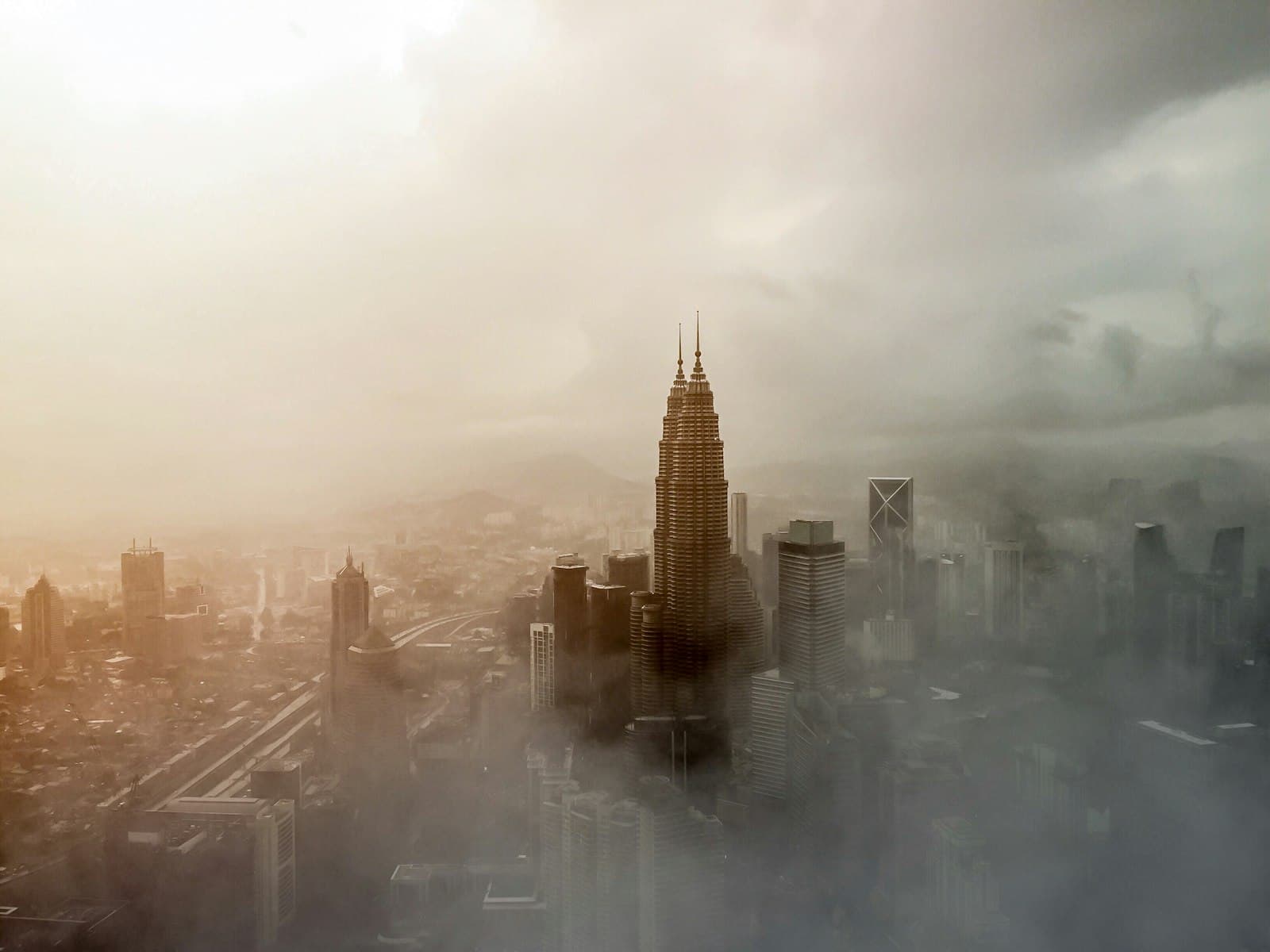
Photo: Ishan @seefromthesky on Unsplash
If you are planning travel to Kuala Lumpur and the words haze and air quality have started appearing in your searches, here is the short version: it is real, it is seasonal, it varies enormously from one year to the next, and it almost never justifies cancelling a trip. What it does justify is knowing which number to look at — because the figure your phone shows you and the figure the Malaysian government acts on are two different things, and confusing them is how people talk themselves out of a perfectly good week.
Haze and air quality in Kuala Lumpur, for travel planning
The haze is not KL's own smoke. It drifts in from land-clearing and peat fires on Sumatra and Kalimantan, carried over by the south-westerly winds of the drier months. That puts the window roughly between June and October, with August and September the likeliest weeks to be affected.
How bad it gets depends almost entirely on how dry Indonesia's fire season is. In a wet year KL barely notices. In a dry one — the kind driven by El Niño — the skyline goes soft, the sunsets go orange, and the readings climb for a week or two at a time. Our month-by-month guide to KL's weather covers where this sits alongside the monsoons.
Two things are worth holding onto. Episodes come in bursts of days, not months. And a downpour clears the air remarkably fast — which, in a city that gets afternoon thunderstorms most of the year, happens often.
The number you are reading is probably the wrong one
This is the part almost no traveller guide explains, and it causes more panic than the haze does.
Malaysia runs its own API — the Air Pollutant Index. Most phone apps, including IQAir, show the US AQI. They are built from different breakpoints, so the same air produces two very different headline numbers.
Take fine particles at around 36 µg/m³. Malaysia's API still calls that band Moderate. The US scale has already moved into Unhealthy for Sensitive Groups. Neither is wrong — Malaysia's PM2.5 standard sits at 35 µg/m³ against the World Health Organization's 2021 guideline of 15, and the two systems simply draw their lines in different places.
So when your app says 150 and the news says the local station is fine, nobody is covering anything up. You are reading two rulers. For anything with consequences attached — school closures, health advisories, official warnings — Malaysia uses its own API, published station by station on the Department of Environment's MyEQMS portal and its MyJAS app. That is the number to check.
What the API bands actually mean
The Malaysian scale runs in five bands:
- 0–50 — Good. Nothing to think about.
- 51–100 — Moderate. Normal for a big tropical city. Carry on.
- 101–200 — Unhealthy. You can see it and probably smell it. Schools stop outdoor activities above 100.
- 201–300 — Very unhealthy. Schools close outright above 200.
- 300+ — Hazardous. Rare in KL, and a genuine stay-indoors day.
The threshold worth remembering is 100. Below it, plan your trip as normal. Above it, do what the schools do: move the outdoor half of your day inside, and skip the long walk or the hilltop viewpoint. Above 200, treat the day as an indoor one and do not feel you are missing much — the view would have been white anyway.
For context, during the episode in early September 2026, stations in Kuala Lumpur were reading in the 150–165 range: firmly unhealthy, visibly hazy, and still a week in which most visitors did most of what they came to do.
Should you cancel? Almost certainly not
For a healthy adult on a short stay, a hazy week in KL is an inconvenience, not a hazard. The skyline photos will be flat, an outdoor lunch will be less appealing, and you may wake up with a slightly scratchy throat. That is usually the extent of it.
The people who should watch more carefully are those with asthma or another lung condition, anyone pregnant, and families with infants or elderly relatives. If that is you, check the forecast in the days before you fly and pack whatever inhaler or medication you normally rely on — pharmacies here are excellent, but bring your own.
Rebooking a whole trip around a forecast that changes week to week rarely pays off. Building a flexible day or two into your plans does.
A bad-air day is a very good KL day indoors
This city is unusually well set up for weather you want to hide from — which is just as true for a thunderstorm as for haze. Within a short walk or one train stop of KLCC you have Suria KLCC and the aquarium beneath it, Petrosains, the Petronas art gallery, and the concert hall where the Malaysian Philharmonic plays. A little further out sit the Islamic Arts Museum and the National Museum, both excellent and both entirely indoors.
Then there is the obvious one: KL's malls are genuinely destinations, filtered and cold, and connected to each other by covered walkways and rail. A hazy afternoon is the right time to finally do Bukit Bintang properly. If you are reshuffling an itinerary, our two-day KL plan is easy to run indoors-first.
Packing and practicalities
A surgical mask is close to useless against fine particulate. If you want real protection, bring an N95 or KN95 — a couple in your bag covers a bad stretch, and they are easy to buy locally too. Eye drops help more than people expect, since itchy eyes tend to arrive before anything else.
Where you stay matters more than most people realise. A sealed, air-conditioned apartment with the windows shut is a meaningful buffer, and having a kitchen means a hazy evening does not have to mean going out. If you are still choosing, see what is available across our KLCC apartments — all of them put you within reach of the indoor half of the city.
Finally: check the real number before you write off a day. More often than not, the haze in the photographs looks far worse than the afternoon actually is.
Frequently asked questions
When is haze season in Kuala Lumpur?
Roughly June to October, peaking around August and September, when the dry season on Sumatra and Kalimantan drives land-clearing and peat fires and the south-westerly winds carry the smoke over. It varies a lot year to year — some years KL barely notices it.
Why does my air quality app show a much worse number than the Malaysian government?
They are different scales. Malaysia's API and the US AQI used by most apps set their breakpoints differently, so the same air can read 'Moderate' on one and 'Unhealthy' on the other. Neither is lying. For anything official — school closures, health advisories — Malaysia uses its own API.
What API reading should make me change my plans?
Below 100 you can carry on normally. Above 100 the authorities stop outdoor activities at schools, which is a sensible cue to move your own plans indoors. Above 200 schools close outright — treat that as a day to stay in.
Should I cancel a trip to Kuala Lumpur because of haze?
Almost never. Episodes usually last days rather than weeks, KL has an enormous amount to do indoors, and a bad-air day is far more of an inconvenience than a danger for a healthy short-stay visitor. If you have asthma or a lung condition, or you are travelling with an infant, it is worth watching the forecast more closely.
Do I need a mask for the haze in Kuala Lumpur?
A surgical mask does very little against fine particles. If you want protection, bring an N95 or KN95. On most hazy days in KL you will be moving between air-conditioned buildings anyway and barely need one.
Where do I check the real air quality in Kuala Lumpur?
The Department of Environment publishes live station-by-station API readings on its MyEQMS portal and the MyJAS app. Third-party apps like IQAir are useful, but read them as a different scale, not a correction.
Sources
- Department of Environment Malaysia — MyEQMS, official live API readings
- Why Malaysia's 'unhealthy' may not mean what you think — ExpatGo
- Move classes online when API hits 100, say health experts — Free Malaysia Today
- Haze worsens as 18 areas including KL record unhealthy air — Malay Mail
- Indonesia's wildfire season surges as haze spreads into Malaysia — Mongabay
- Malaysian Meteorological Department — weather phenomena & monsoon seasons
- Kuala Lumpur air quality, real-time index — IQAir