The Profit-Sharing Model in Kuala Lumpur: What Property Management Operators Really Charge
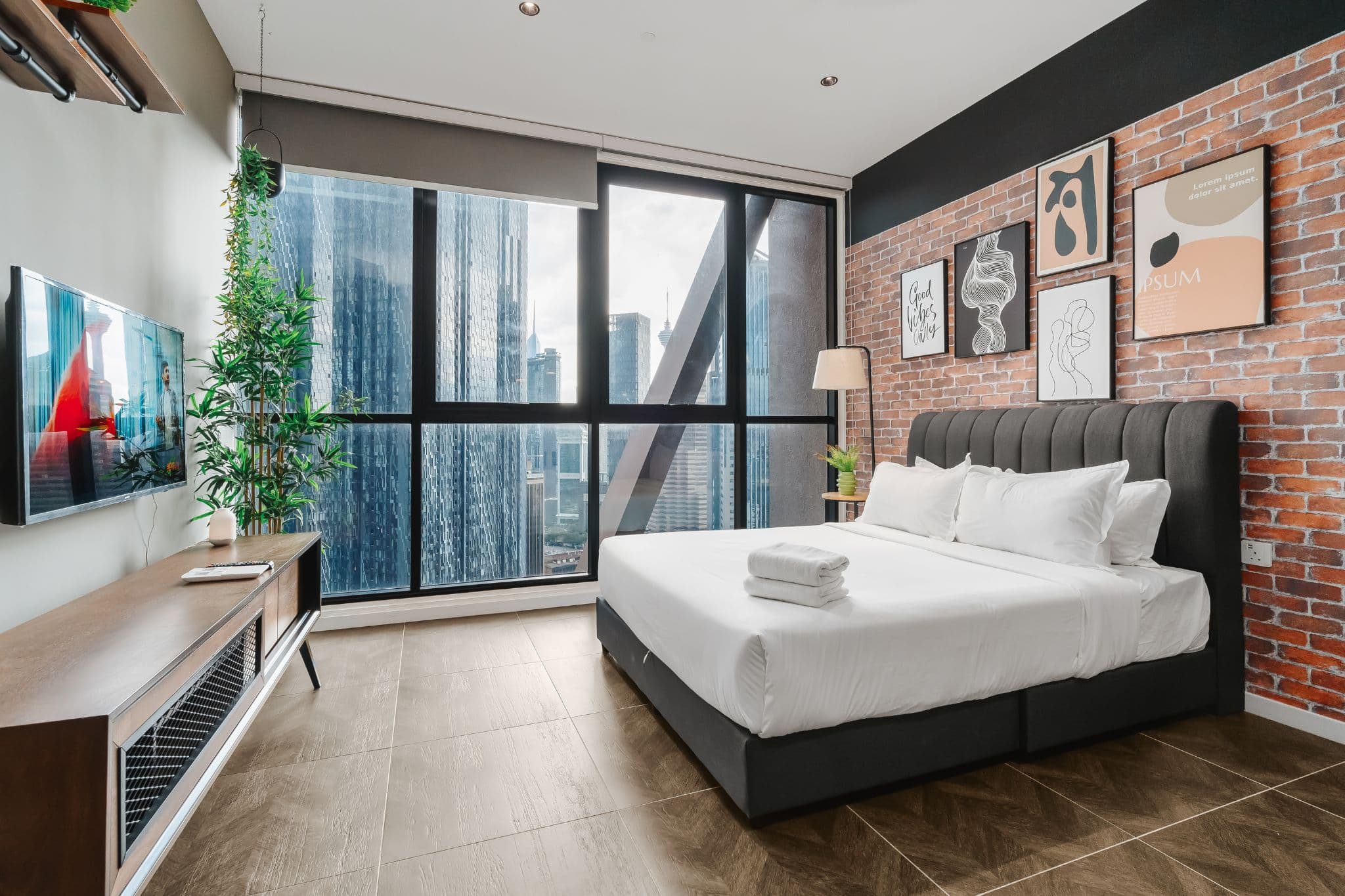
Photo: Soulasia
If you own a condo in KLCC, Mont Kiara or TRX, sooner or later an operator will offer to run it for you on a profit-sharing model. In Kuala Lumpur property management that offer almost always arrives as a single headline number — "70/30, in your favour" — and almost never with the arithmetic behind it. The number is the least useful part of the deal. What decides your actual income is the base the percentage is applied to, the expense list that comes off before it, and what the operator is contractually obliged to do for its share. Here is how those three pieces fit together in the KL market.
How the profit-sharing model works in Kuala Lumpur property management
You keep the title and the mortgage. The operator furnishes and photographs the unit, lists it across Airbnb, Booking.com, Agoda and its own site, sets the nightly rates, handles the guests and the cleaning, and reports to you monthly. Booking money lands with the operator, which pays you your share on a stated date.
The critical detail is what the percentage is applied to. Two structures are both common in KL, and they are marketed identically.
Split on gross. The percentage comes off booking revenue as it lands, and the operator absorbs the day-to-day running costs out of its own share. Meta Home and NaiBnB both advertise 70/30 with cleaning, utilities, toiletry restocking and basic repairs sitting on the operator's side of the line.
Split on net. Running costs are itemised, deducted from revenue, and what remains is split. This is how Soulasia's profit share is built: channel commission and payment processing, housekeeping at a fixed per-turnover rate (linen and guest consumables included), utilities and small repairs come off a closed list, then the net splits 80/20 in the owner's favour.
Seventy percent of gross and seventy percent of net are not the same money. Neither structure is dishonest — the gross version simply prices the running costs into the operator's margin, and carries the risk that a heavy-maintenance unit gets less attention. But you cannot compare two "70/30" offers until you know which one each is.
A third arrangement, guaranteed rent, is not profit sharing at all: you are paid a fixed monthly amount whether the unit is full or empty, selling the upside for certainty.
What percentage do operators take in Kuala Lumpur?
For full-service short-stay management, 70/30 in the owner's favour is the KL default. It is what Meta Home and NaiBnB publish, and NaiBnB notes the split can move to 75/25 or 80/20 for stronger locations and higher-value units. Soulasia's profit share is 80/20, applied to net. The higher owner share is deliberate: once running costs come off first, 70% of net lands well below 70% of gross, and 80/20 closes most of that gap.
Below that sits a lighter tier. Commission-only management — where the operator markets, prices and books the unit and coordinates housekeeping, but the running costs stay with you — has historically been quoted in Malaysia at around 20–28% of rental income. Internationally, full-service short-let commissions cluster across a 15–35% band, and where an operator falls in it tracks how much of the work and cost it absorbs.
Which is why the percentage on its own tells you nothing. What matters is what comes off before it and who pays when a month goes badly. An operator that sends you invoices for cleans, restocks and call-outs on top of its share can leave you less than one with a bigger percentage; ask whether a payout can ever be negative, and whether you can ever receive a bill.
What actually comes out before the split
Whichever side of the line they sit on, these costs exist. Make the operator name each one.
- Channel commissions. The largest single deduction. Airbnb has moved professional listings — serviced apartments, and anyone running property-management software — onto a host-only service fee, most commonly 15.5% of the booking subtotal. Booking.com commission is set at sign-up and typically lands in a 10–25% range, plus payment processing on top. A statement that shows "gross revenue" without naming the channel fee is hiding roughly a sixth of your income.
- Cleaning and linen. Charged per turnover, so it scales with occupancy rather than with time. In a short-stay unit this is the highest-frequency cost there is.
- Guest consumables. Toiletries, coffee, water, cleaning supplies.
- Utilities and internet. A long-stay tenant pays their own; short-stay guests never do.
- Ad-hoc repairs. Aircon servicing, a dead water heater, a broken blind.
- Taxes. Malaysia's tourism tax is RM10 per room per night on foreign guests, and service tax applies once an operator crosses its registration threshold.
Costs that normally stay with you regardless of model: the building's maintenance fee and sinking fund, quit rent and assessment, fire insurance, and income tax on your share. Capital replacement — a new mattress, a failed fridge, repainting — is almost always the owner's as well.
That last boundary is where contracts go quiet. "Ad-hoc repair" and "capital replacement" are rarely defined, and the difference between them is the difference between a RM180 invoice and a RM3,000 one. Ask for the definition in writing.
What the operator's share has to buy
Thirty percent is a substantial share of a KLCC unit's revenue. It should buy work you can list:
- Listing and distribution — professional photography and live listings across the major channels plus a direct booking route, so you are not wholly dependent on one platform's algorithm.
- Revenue management — rates tuned to season, events, day of week and competitor movement. This is the single line that most separates a good operator from a mediocre one, and it is worth more than a couple of points on the split.
- Guest handling, around the clock — enquiries, check-in, and the 2 a.m. lockout.
- Housekeeping to a fixed standard — a hotel-grade turnover with fresh linen, not a tidy-up between guests.
- Maintenance — problems found on inspection rather than reported in a one-star review.
- Reporting and payout on a stated date — a monthly statement with every line visible. Soulasia pays owners within the first seven days of each month with the statement attached; a live dashboard beats a monthly PDF, because it lets you check occupancy and rates while you can still ask about them.
The compliance work that comes with the keys
This is the part of Kuala Lumpur property management that a percentage never captures, and it is where an inexperienced operator will quietly leave the risk with you.
Your building's by-laws come first. A management corporation can lawfully prohibit short-term letting: in Innab Salil & Ors v Verve Suites Mont' Kiara Management Corporation (2020) the Federal Court held that Airbnb-type operation is commercial activity inconsistent with residential use, and that by-laws banning it are enforceable. Breaching one exposes you to compound fines and claims at the Strata Management Tribunal under the Strata Management Act 2013. Many KL condominiums have since passed exactly such by-laws.
Then the council. DBKL's position is that short-term accommodation in residential zones is not permitted unless licensed under specific conditions, enforced through existing building and business licensing powers rather than a dedicated statute.
Then the tax obligations — tourism tax collection and remittance, and service tax registration where the threshold is crossed.
An operator that shrugs at "is my building actually allowed to do this?" has told you something important: it will not carry that risk, so you will.
Questions to ask before you sign
- Is the split on gross or on net? Get both defined in the agreement, not in a WhatsApp message.
- List every deduction, and define the line between ad-hoc repair and capital replacement.
- Show me a real owner statement, redacted, for a comparable unit.
- What channel-fee assumption sits inside your revenue estimate?
- Give me the estimate in ringgit per month after everything — not as a percentage.
- What is the term, the notice period and the exit route?
- Have you checked my building's by-law and the licensing position for this address?
Compare offers in ringgit, never in percentages. Two operators quoting the same 70/30 can hand you monthly figures that differ by a third, and the gap will be sitting in the deduction list and the occupancy assumption, not in the headline.
If you own a unit in central Kuala Lumpur and want that arithmetic run against your actual building, Soulasia's owner page sets out both the profit-share and guaranteed-rent terms and what gets deducted before the split. For how the same units read from the guest's side — the standard your unit is being held to — our guides cover the KL short-stay market in more detail.
Frequently asked questions
What percentage do short-term rental operators take in Kuala Lumpur?
70/30 in the owner's favour is the market default for full-service management in KL, and several operators publish exactly that. Stronger locations and higher-value units are sometimes quoted at 75/25 or 80/20. A lighter, commission-only tier — where the operator markets and books the unit but you keep the running costs — sits lower, historically around 20–28% of rental income.
Is the split calculated on gross or net revenue?
Both structures exist in Kuala Lumpur and the difference is large. Some operators split gross booking revenue and absorb cleaning, utilities and consumables out of their own share. Others deduct those running costs plus channel commissions first and split the net. Ask which one you are being offered before you compare any two percentages.
What expenses are deducted before an owner is paid?
Typically channel commissions, cleaning and linen, guest consumables, utilities and internet, and ad-hoc repairs. Your building's maintenance fee and sinking fund, quit rent and assessment, fire insurance, capital replacements and income tax on your share normally stay with you.
What is the operator responsible for?
For a full-service share the operator should own listing and photography, distribution across booking channels, dynamic pricing, 24/7 guest handling, housekeeping to a fixed standard, maintenance, and a monthly statement paid on a stated date. Compliance with your building's by-laws and the local licensing position belongs on that list too.
Is short-term rental even allowed in my Kuala Lumpur condo?
It depends on your building, not on a single national rule. A management corporation can pass a by-law prohibiting short-term letting, and the Federal Court has held such by-laws enforceable. DBKL also treats short-term accommodation in residential zones as not permitted unless licensed under specific conditions. Check the by-law before you sign anything.
Is guaranteed rent better than profit sharing?
It is a different trade, not a better one. Guaranteed rent pays you a fixed monthly amount whether or not the unit is occupied, so you give up peak-season upside in exchange for certainty. Profit sharing keeps the upside and the exposure. Which wins depends on your building's seasonality and how much variance you can live with.
Sources
- Airbnb Help Centre — Airbnb service fees
- Houst — Booking.com fees for hosts: full breakdown (2026)
- SuiteOp — How should STR management companies structure fees in 2026?
- NaiBnB — Airbnb & homestay management (Kuala Lumpur)
- Meta Home Management — Airbnb & property management in Kuala Lumpur
- Softinn — Homestay management services in Malaysia: a comparison
- JY Ko Advocates & Solicitors — Legal guide to Airbnb and short-term rentals in Malaysia's strata properties
- ClearTax Malaysia — Tourism tax: what you need to know in 2026